

A vertical garden Dubai is a structured planting system that grows plants on walls or upright frames instead of traditional ground beds. This guide explains types, applications, benefits, maintenance, and how installation works for homes, offices, and public spaces across the UAE.
What Is a Vertical Garden in Dubai?
A vertical garden Dubai uses modular panels, planters, or trellises to grow vegetation on vertical surfaces. These systems can be installed indoors or outdoors and may use real plants, preserved moss, or high‑quality artificial foliage depending on the space and maintenance preferences.
In Dubai’s climate, vertical gardens serve both aesthetic and functional roles. They add greenery where floor area is limited, improve air quality indoors, soften harsh building facades, and support biophilic design trends in residential and commercial projects.
Types of Vertical Gardens and Green Walls
Different systems suit different locations and goals. Understanding the main types helps in selecting the right solution.
Indoor Vertical Gardens
Indoor vertical garden Dubai setups are common in apartments, offices, lobbies, and restaurants. They are designed to work with air‑conditioning, limited natural light, and controlled humidity.
- Living plant walls use real plants in modular panels with integrated irrigation and drainage.
- Preserved moss walls offer a natural look with no watering or lighting needs.
- Artificial green walls provide a consistent appearance with minimal upkeep.
Popular indoor garden ideas include feature walls behind reception desks, plant walls in meeting rooms, and indoor plant wall installations along corridors. For indoor garden design Dubai, species such as pothos, snake plant, ZZ plant, and peace lily are often chosen for their tolerance to low light and stable temperatures.
Outdoor Vertical Gardens
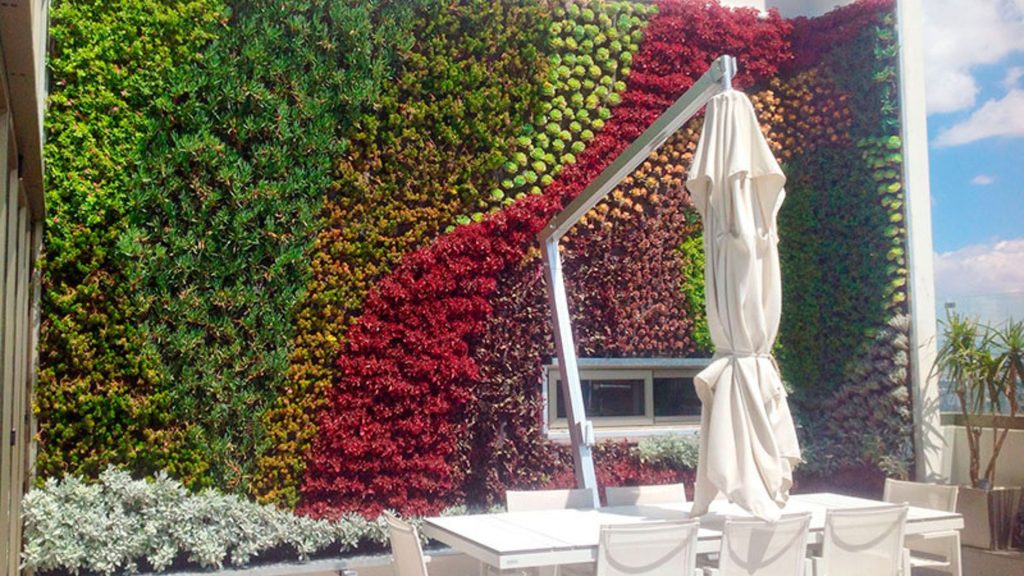
An outdoor verticle Garden (commonly spelled “vertical”) is built to handle sun, heat, wind, and occasional dust. These are used on villa walls, building facades, balconies, and perimeter screens.
- Living outdoor walls rely on drought‑tolerant climbers and shrubs with automated irrigation.
- Artificial outdoor walls use UV‑stabilised panels that resist fading.
- Modular panel systems allow sections to be replaced easily if damaged.
For outdoor garden design, common outdoor garden ideas dubai include privacy screens for terraces, green partitions for pool areas, and facade treatments that reduce heat gain. When planning outdoor garden landscape ideas, orientation matters: south‑ and west‑facing walls need hardy, sun‑tolerant species, while shaded elevations can support denser, leafier plants.
Indoor Living Walls
An indoor living wall is a subset of vertical gardens focused on real plants inside buildings. These are sometimes referred to as a living wall indoor or indoor plant wall.
- Indoor living wall planter systems use lightweight substrates and drip irrigation.
- Some projects use indoor artificial living wall dubai panels where maintenance access is difficult or water use must be minimised.
These walls work well in atriums, hotel lobbies, clinics, and corporate offices where a strong visual statement is needed without occupying floor space.
Outdoor Living Walls
An outdoor living wall dubai installation typically includes weather‑resistant frames, corrosion‑protected irrigation, and plants suited to high temperatures.
- Systems are often described as an outdoor living wall system.
- Selection of plants for living walls outdoors focuses on heat tolerance, wind resistance, and low water demand once established.
Common choices include bougainvillea, ficus pumila, and certain succulents. These are used on external walls, garden partitions, and entrance features.
Artificial and Green Walls
Artificial green wall dubai solutions are widely used where maintenance resources are limited or where a specific look must be maintained year‑round.
- An artificial vertical green wall can mimic dense foliage, flowering vines, or mixed textures.
- A green wall vertical garden may combine real and artificial elements for visual depth with reduced care needs.
A living green wall, by contrast, uses only real plants and requires irrigation, pruning, and periodic plant replacement. The choice between artificial and living depends on budget, access, and desired environmental benefits.
Green Facades
A green facade dubai typically refers to climbing plants trained on cables, mesh, or trellis fixed to a building’s exterior. This differs from panel‑based living walls.
- A green wall facade may use planter boxes at the base with climbers growing upward.
- Green facade design considers structural load, wind exposure, and irrigation routing.
- Green facade plants are selected for vigorous growth and resilience, such as bougainvillea, jasmine, and certain figs.
Green facades are common on commercial buildings, parking structures, and perimeter walls where large surface areas need greening with simpler systems.
Hydroponic Vertical Systems
A vertical hydroponic system dubai grows plants without soil, using nutrient‑rich water circulated through the wall. These are a subset of hydroponic vertical farming systems adapted for architectural use.
- Vertical hydroponic systems uae are used in offices, malls, and educational spaces to showcase sustainable technology.
- They reduce substrate weight and can improve water efficiency when well designed.
Hydroponic walls require careful monitoring of pH, nutrients, and pump function, so they are best supported by experienced installers and maintenance teams.
Benefits of Vertical Gardens in Dubai
Vertical gardens offer practical advantages in addition to visual appeal.
- Space efficiency: They add greenery where ground area is limited, ideal for apartments and dense urban sites.
- Thermal comfort: Outdoor systems can lower surface temperatures on walls, reducing heat transfer into buildings.
- Air quality: Indoor living walls help filter particulates and add humidity in air‑conditioned environments.
- Acoustic improvement: Dense foliage and moss panels absorb sound, useful in open‑plan offices and restaurants.
- Aesthetic value: Green walls create focal points in lobbies, villas, and hospitality venues.
- Sustainability: They support green building objectives and can contribute to environmental reporting for developers.
Maintenance Requirements
Maintenance needs vary by system type and location.
Living Plant Walls
Real‑plant walls need regular care to stay healthy.
- Irrigation checks for timers, filters, and drip emitters.
- Pruning and shaping to maintain density.
- Nutrient management through the irrigation system.
- Plant replacement where sections thin out.
- Pest and disease monitoring suited to UAE conditions.
Most living walls benefit from monthly or quarterly service visits, with more frequent checks in high‑visibility areas.
Artificial and Preserved Walls
Artificial and preserved systems require far less ongoing work.
- Dusting or gentle cleaning a few times a year.
- Occasional panel adjustments if fixings loosen.
- UV‑resistant outdoor panels should be inspected for fading or damage after long exposure.
These options suit locations with limited access or tight operational budgets.
Hydroponic Systems
Hydroponic vertical gardens need technical oversight.
- Regular testing of water quality, pH, and nutrient levels.
- Pump and filter inspections to prevent blockages.
- Backup plans for power outages to avoid plant stress.
Because of this complexity, hydroponic walls are usually paired with scheduled maintenance contracts.
How Installation Works
A typical vertical garden company dubai follows a structured process to ensure long‑term performance.
- Site assessment: Measurement of wall dimensions, structural checks, access to water and electricity, and light analysis.
- System selection: Choice between living, artificial, preserved, or hybrid systems based on budget, maintenance capacity, and design goals.
- Design and engineering: Layout of panels, irrigation routing, drainage details, and structural fixings. For large facades, load calculations and waterproofing are essential.
- Installation: Mounting of frames or panels, connection of irrigation and drainage, and planting or panel fixing.
- Commissioning: Testing irrigation cycles, checking for leaks, and adjusting flow rates.
- Handover and maintenance plan: Explanation of system operation and agreement on service intervals.
Many vertical garden solutions dubai providers offer end‑to‑end services, from concept to ongoing care, ensuring that the wall performs as intended in Dubai’s climate.
Choosing the Right System for Your Space
Selecting a system depends on several factors.
- Location: Indoor vs outdoor, shaded vs full sun.
- Maintenance capacity: In‑house team vs external service.
- Water and power access: Critical for living and hydroponic walls.
- Design intent: Natural, lush look vs controlled, uniform appearance.
- Budget: Initial cost and long‑term maintenance expenses.
For example, an office lobby with limited maintenance staff might choose an indoor artificial living wall dubai, while a villa owner wanting a natural garden feel may prefer a living green wall with automated irrigation. A commercial developer working on a large facade could opt for a green facade design with climbers or a modular outdoor living wall system, depending on structural constraints.
Conclusion
Vertical gardens have become a key element of modern landscaping and interior design in the UAE. Whether the goal is an indoor garden for a corporate office, an outdoor verticle Garden for a villa, or a large green wall facade for a commercial building, the right system can enhance comfort, aesthetics, and sustainability.
For tailored advice and implementation support, Vertical Gardens Dubai offers guidance on system selection, design, and maintenance planning to help clients achieve durable and visually appealing green walls across residential and commercial projects.
Frequently Asked Questions
1. What is the difference between a vertical garden and a green facade?
A vertical garden Dubai usually refers to panel‑based systems with plants grown in modules attached to the wall. A green facade dubai typically uses climbing plants trained on cables or trellis, rooted in planters at the base. Facades are often simpler structurally, while panel systems offer denser, more controlled coverage.
2. How much maintenance does a living wall need in Dubai?
Living walls generally need regular irrigation checks, pruning, nutrient management, and periodic plant replacement. Service frequency depends on the system and location, with many projects using monthly or quarterly maintenance visits to keep the wall healthy and visually consistent.
3. Are artificial green walls suitable for outdoor use in Dubai?
Yes, if they are specified as UV‑stabilised and weather‑resistant. An artificial green wall dubai designed for outdoor use can withstand high temperatures and sunlight without rapid fading, making it suitable for terraces, facades, and pool areas where minimal maintenance is desired.
4. Can vertical gardens be installed in existing buildings?
In most cases, yes. A site assessment is needed to confirm structural capacity, waterproofing, and access to water and electricity. For heavy outdoor living wall dubai systems or large green wall vertical garden installations, additional engineering may be required to ensure safety and durability.
5. Which plants work best for outdoor living walls in Dubai?
Common plants for living walls outdoors include bougainvillea, ficus pumila, jasmine, and selected succulents. These species tolerate heat, sun, and wind, and perform well with automated irrigation. Plant choice should reflect orientation, exposure, and the desired density and colour of the wall.